Buy a premium cigar. Leave it on a shelf for three days. Try to smoke it.
The wrapper cracks. The draw gets tight. Whatever flavor the maker spent months developing is gone. Cigars are a natural product, and without the right storage conditions, they fall apart fast. A humidor fixes that.
What is a humidor?
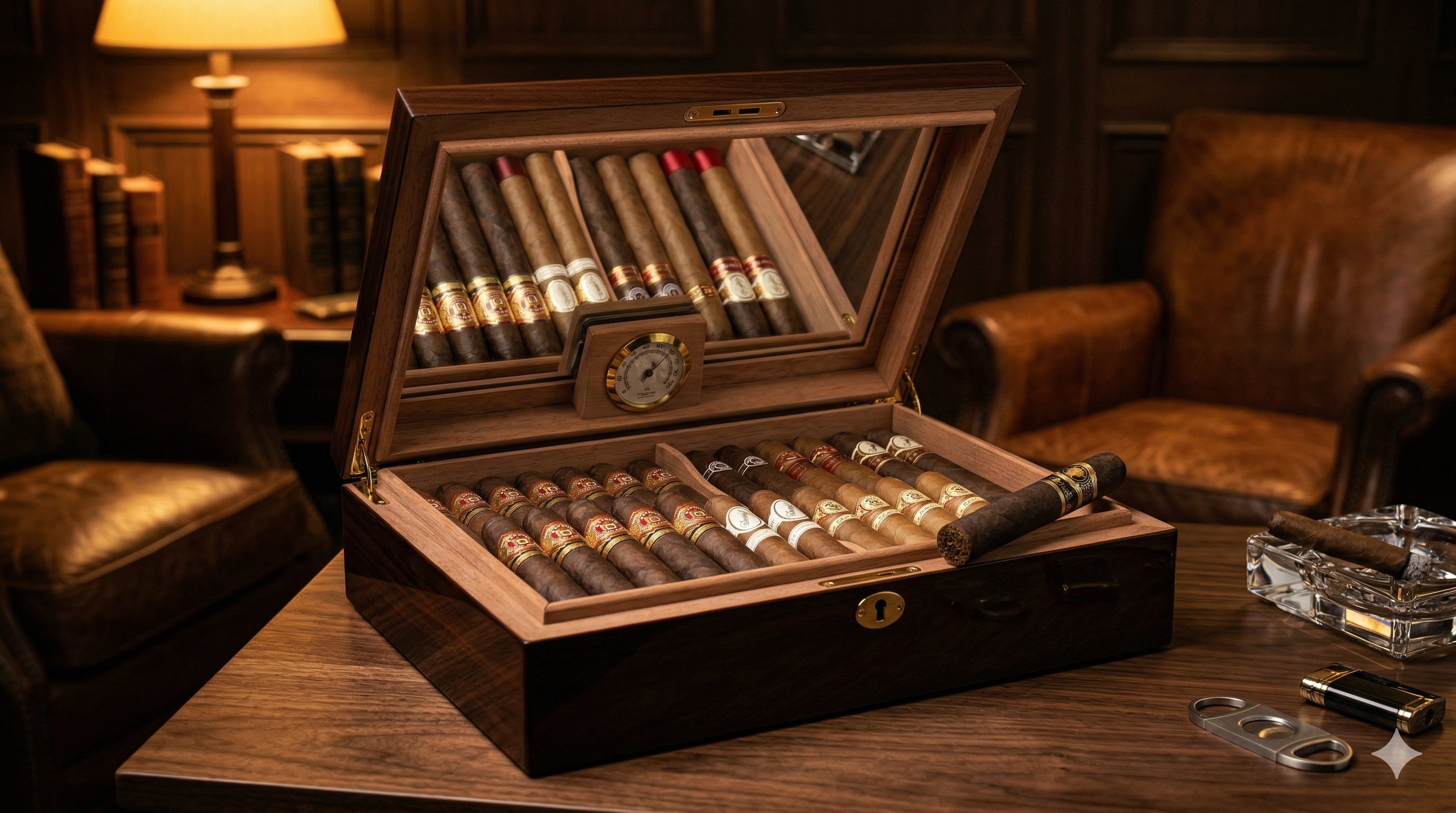
A humidor is a storage container that holds a consistent level of humidity and temperature so your cigars stay in smoking condition. It recreates the tropical climate where tobacco is grown and aged. That's really all it does, but it does it well.
Premium cigars contain natural oils and moisture. When those leaves dry out, the oils evaporate and the flavor goes with them. Too much moisture, on the other hand, causes mold and makes cigars unsmokeable. A humidor keeps things in the narrow window between those two problems.
How it works
Three things make a humidor work:
Spanish cedar lining. The inside of a quality humidor is lined with Spanish cedar (Cedrela odorata). This wood absorbs and releases moisture slowly, acting as a natural buffer. It also adds a subtle aroma that complements tobacco over time. Bonus: its natural oils help repel tobacco beetles, which is a real concern if you're storing cigars long-term.
Humidification device. This adds moisture to the air inside the box. Options range from basic sponge humidifiers to gel beads, Boveda packs (two-way humidity control packets that are essentially set-and-forget), and electronic systems for larger setups.
Hygrometer. Measures relative humidity inside the humidor. Analog hygrometers come with most humidors out of the box, but they're often wildly inaccurate. A $15 digital hygrometer is one of the best upgrades you can make. Without a reliable reading, you're guessing, and guessing leads to either dried-out or moldy cigars.
A tight-fitting lid with a good seal ties it together, keeping the controlled environment inside from getting disrupted every time you open a window.
Types of humidors
Desktop humidors
The standard choice for home use. Typically hold 25 to 150 cigars, sit on a table or shelf, and are made from hardwood with a Spanish cedar interior.
If you smoke a few cigars a week and want to keep a rotating collection at home, a desktop humidor in the 50 to 100 cigar range is where most people start. Budget $40 to $300 for a quality unit. Anything under $30 usually has a poor seal, which defeats the entire purpose.
Cabinet humidors
Freestanding, furniture-sized pieces that hold 500 to several thousand cigars. Multiple shelves, drawers, sometimes built-in electronic humidification. These are for serious collectors or anyone whose habit has outgrown a desktop box. They also look great in a home office. $500 to $5,000+.
Travel humidors
Compact, crush-proof cases for 2 to 10 cigars. Hard plastic or leather, foam interior, basic humidification element. Take them on trips, to the golf course, wherever. $15 to $80.
Walk-In humidors
Climate-controlled rooms found in cigar shops and lounges. Spanish cedar walls, commercial-grade humidification, thousands of cigars. Stepping into a good walk-in humidor is one of the best experiences in the hobby. The aroma alone is worth the visit, and the selection is usually far larger than what you'll find online.
Browse cigar shops near you on our directory to find one worth visiting.
Coolidor and tupperdor (DIY)
Worth mentioning: a clean plastic cooler (coolidor) or airtight food container (tupperdor) lined with Spanish cedar sheets and Boveda packs makes a surprisingly effective budget humidor. No visual appeal whatsoever, but they work. $10 to $50 for the full DIY setup.
Seasoning a new humidor
You can't just buy a humidor, throw cigars in, and walk away. New humidors need to be seasoned first. The Spanish cedar lining is dry from the factory, and dry cedar will steal moisture from your cigars instead of regulating it.
Here's the process:
-
Wipe down the interior with a clean cloth dampened (not soaking) with distilled water. Hit every cedar surface: lid, dividers, trays. Never use tap water. Minerals damage the wood and affect flavor.
-
Place a humidity source inside. A small dish of distilled water or a couple of Boveda 84% seasoning packs. Close the lid.
-
Wait 24 to 48 hours. The cedar needs time to absorb moisture evenly. If you used the wipe-down method, you may need to do it twice.
-
Check the hygrometer. When relative humidity stabilizes between 65% and 72%, the humidor is ready.
-
Swap in your regular humidification (Boveda 69% or 72% packs work well) and add your cigars.
Two to three days total. Skipping this step is one of the most common mistakes new cigar smokers make, and it's the reason so many people think their humidor "doesn't work."
Maintaining proper humidity
The numbers
- Relative humidity: 65% to 72%. The old rule is "70/70" (70% RH, 70°F), but many experienced smokers run closer to 65-67%. Lower humidity produces a better burn and more nuanced flavor.
- Temperature: 65 to 70°F (18-21°C). Above 75°F, you risk tobacco beetle eggs hatching. They will destroy an entire collection.
Keeping it dialed in
Refill or replace your humidification regularly. Boveda packs last 2 to 4 months depending on how tight the seal is and how often you open the lid. Gel-based humidifiers need distilled water refills every few weeks.
Calibrate your hygrometer every 6 months or so. Even digital ones drift. A Boveda calibration kit or the salt test method takes five minutes.
Rotate your cigars occasionally. Move the bottom ones to the top. This matters more in larger humidors where humidity can distribute unevenly.
Keep the humidor out of direct sunlight. Heat from sun exposure spikes the internal temperature, which invites mold and beetles. Near a heating vent is just as bad.
Looking for cigars to fill yours? Check out our guides on the best beginner cigars and types of cigars.
Common humidor mistakes
Skipping seasoning. Dry cedar absorbs moisture aggressively. Your humidification device can't keep up, and your cigars dry out within days.
Using tap water. Always distilled. Tap water contains minerals that clog humidifiers, promote mold, and introduce off-flavors.
Trusting the analog hygrometer it came with. Most ship inaccurate by 10% or more. Replace it with a digital one immediately.
Overcrowding. Cigars need airflow. Packing a humidor completely full creates dead zones where mold can take hold.
Storing near strong odors. Cigars absorb smells. Keep the humidor away from kitchens, perfumes, cleaning products. And never store flavored and non-flavored cigars in the same box.
Buying your first humidor
Here's what actually matters:
A tight seal. Close the lid on a dollar bill so it hangs halfway out. If you can pull it free without resistance, the seal isn't good enough. This is the single most important thing.
Spanish cedar interior. Other woods don't regulate humidity the same way. No substitutes here.
A digital hygrometer. If it comes with an analog one, plan to replace it before you even add cigars.
More capacity than you think you need. Double your estimate. If you think 25 cigars is enough, get a 50. You will fill it faster than you expect.
For a first humidor, $60 to $120 gets you a well-made 50 to 75 cigar desktop unit that will last years. Pair it with a few Boveda 69% packs and you're set.
Frequently asked questions
How long do cigars last in a humidor?
Indefinitely, if conditions are maintained. Many premium cigars actually improve with age, developing smoother and more complex flavors over months and years. Without a humidor, most cigars start drying out noticeably within a few days.
Can you store cigars without a humidor?
Short-term, yes. A sealed plastic bag with a Boveda pack keeps cigars fresh for a week or two. Anything longer and you need a proper humidor or at least a tupperdor setup. Leaving cigars unprotected on a shelf is a guaranteed way to ruin them.
What humidity should I set?
The traditional recommendation is 70%, but many smokers prefer 65-68%. Lower humidity leads to a more even burn and lets you taste more of the tobacco. Start at 69% with a single Boveda pack and adjust from there.
How often should I open my humidor?
Once or twice a day to grab a cigar or check on things is fine. Won't affect humidity in any meaningful way. Just don't leave it open for more than a minute or two.
Do I need to use distilled water?
Yes. Always. Tap water and spring water contain minerals that promote mold and clog humidifier pores. Boveda packs sidestep this entirely since they're pre-filled and disposable.
New to cigars? Our guide on how to smoke a cigar covers the basics from cutting to lighting to pacing.